Cybersecurity Alert: Top 5 National Threats Q2 2026 Revealed

Cybersecurity Alert: Top 5 National Threats Identified for Q2 2026
As we navigate the ever-evolving digital landscape, the specter of cyber threats looms larger than ever. For Q2 2026, national cybersecurity threats have reached a critical juncture, demanding heightened vigilance and proactive defense strategies. This comprehensive analysis delves into the top five most pressing national cybersecurity threats, offering insights into their nature, potential impact, and crucial mitigation techniques. Understanding these evolving dangers is paramount for governments, critical infrastructure operators, and businesses alike to safeguard national security and economic stability.
The digital realm is a constant battlefield, where adversaries, ranging from sophisticated state-sponsored groups to financially motivated cybercriminals, relentlessly probe for vulnerabilities. The intelligence gathered for Q2 2026 paints a stark picture, highlighting a shift towards more advanced, evasive, and disruptive attack methodologies. Our focus on these top 5 national cybersecurity threats aims to equip organizations with the knowledge needed to fortify their defenses and stay one step ahead of malicious actors.
The interconnectedness of modern society means that a single successful cyberattack can have cascading effects, impacting not just individual entities but entire sectors and, ultimately, national resilience. Therefore, a collective and coordinated effort is essential to combat these formidable national cybersecurity threats. This article serves as a vital resource in that ongoing battle, providing actionable intelligence and strategic guidance.
1. The Persistent and Evolving Threat of Ransomware 2.0
Ransomware, a perennial thorn in the side of cybersecurity professionals, has evolved significantly, presenting an even more formidable challenge in Q2 2026. No longer content with merely encrypting data, modern ransomware campaigns, often dubbed ‘Ransomware 2.0,’ now incorporate advanced techniques such as double extortion, data exfiltration, and even distributed denial-of-service (DDoS) attacks to maximize pressure on victims. This escalation significantly amplifies the impact of these national cybersecurity threats.
Sophistication and Targeting
The perpetrators behind these advanced ransomware attacks are increasingly sophisticated, often operating with the resources and organizational structure akin to traditional businesses. They employ highly targeted approaches, meticulously researching their victims to identify critical systems and data, thereby increasing the likelihood of a successful payout. This precision makes ransomware a particularly potent national cybersecurity threat.
Impact on Critical Infrastructure
While businesses of all sizes remain targets, Q2 2026 has seen a worrying trend of ransomware groups increasingly targeting critical national infrastructure (CNI). Attacks on healthcare systems, energy grids, and transportation networks can have devastating consequences, not only disrupting essential services but also endangering lives and undermining public trust. The potential for widespread societal disruption elevates ransomware to a top national cybersecurity threat.
Mitigation Strategies Against Ransomware 2.0
Combating Ransomware 2.0 requires a multi-layered approach:
- Robust Backup and Recovery: Regular, air-gapped, and immutable backups are non-negotiable. Organizations must have a tested recovery plan to restore operations quickly without succumbing to ransom demands.
- Endpoint Detection and Response (EDR): Advanced EDR solutions can detect and respond to suspicious activity on endpoints, preventing ransomware from establishing a foothold and spreading.
- Network Segmentation: Isolating critical systems and data through network segmentation can limit the lateral movement of ransomware within an organization’s infrastructure.
- Security Awareness Training: Employees are often the first line of defense. Comprehensive training on phishing, social engineering, and safe browsing habits can significantly reduce the risk of initial infection.
- Patch Management: Promptly applying security patches to all software and operating systems closes known vulnerabilities that ransomware often exploits.
- Incident Response Plan: A well-defined and regularly practiced incident response plan is crucial for minimizing damage and recovering efficiently from a ransomware attack.
The fight against ransomware is ongoing, and organizations must continually adapt their defenses to counter the evolving tactics of these persistent national cybersecurity threats.
2. State-Sponsored Cyber Espionage and Sabotage
State-sponsored actors continue to pose one of the most significant national cybersecurity threats in Q2 2026. These sophisticated groups, backed by nation-states, engage in a wide range of malicious activities, including cyber espionage, intellectual property theft, and disruptive or destructive attacks aimed at undermining national security and economic competitiveness.
Advanced Persistent Threats (APTs)
State-sponsored groups often operate as Advanced Persistent Threats (APTs), characterized by their long-term presence within victim networks, stealthy operations, and relentless pursuit of their objectives. They utilize highly sophisticated tools, zero-day exploits, and novel attack vectors to bypass traditional security measures. Their patience and resources make them incredibly difficult to detect and evict, solidifying their position among the top national cybersecurity threats.
Targets and Objectives
Targets for state-sponsored attacks are diverse, ranging from government agencies and defense contractors to critical infrastructure and high-tech industries. Their objectives can include:
- Intelligence Gathering: Stealing sensitive government documents, military plans, and diplomatic communications.
- Economic Espionage: Pilfering intellectual property, trade secrets, and research and development data to gain a competitive advantage.
- Critical Infrastructure Disruption: Pre-positioning malware or launching attacks to disrupt essential services during times of geopolitical tension.
- Influence Operations: Manipulating public opinion through disinformation campaigns and election interference.
Countering State-Sponsored National Cybersecurity Threats
Defending against state-sponsored actors requires a robust and intelligence-driven approach:
- Threat Intelligence Sharing: Collaborating with government agencies and private sector partners to share threat intelligence is vital for understanding adversary tactics and indicators of compromise (IoCs).
- Advanced Threat Detection: Implementing advanced threat detection solutions, including Security Information and Event Management (SIEM) and Security Orchestration, Automation, and Response (SOAR) platforms, is crucial for identifying subtle signs of compromise.
- Zero Trust Architecture: Adopting a Zero Trust security model, where no user or device is inherently trusted, can significantly limit the impact of a breach by requiring continuous verification.
- Proactive Hunting: Security teams should actively hunt for threats within their networks, rather than passively waiting for alerts.
- Supply Chain Security: As state-sponsored actors increasingly target supply chains, rigorous vetting of third-party vendors and continuous monitoring of software components are essential.
The battle against state-sponsored national cybersecurity threats is a continuous arms race, demanding constant innovation and adaptation from defenders.
3. Supply Chain Vulnerabilities: A Growing National Cybersecurity Threat
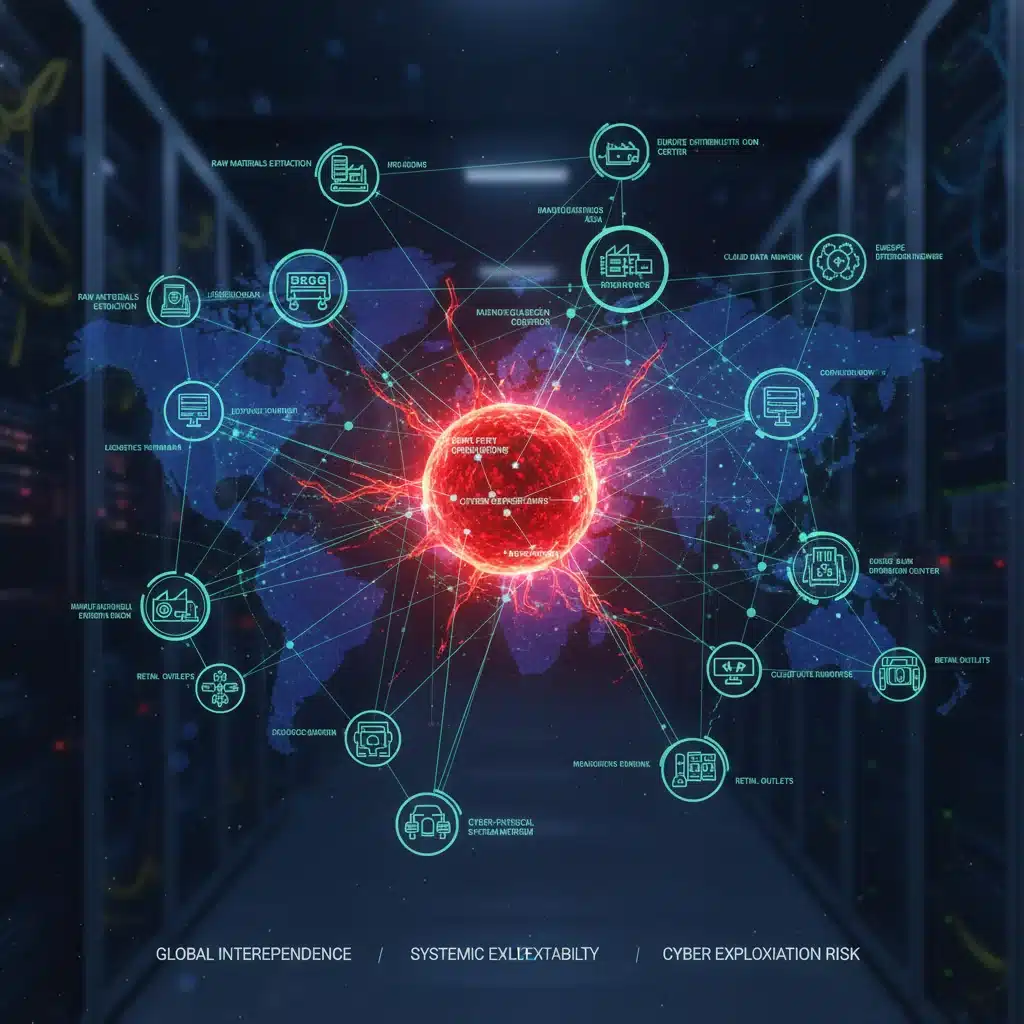
The interconnected nature of modern technology ecosystems means that a vulnerability in one component or vendor can have far-reaching consequences across an entire supply chain. For Q2 2026, supply chain attacks have emerged as a particularly insidious and challenging national cybersecurity threat.
The Weakest Link
Adversaries recognize that directly attacking a well-defended organization can be difficult. Instead, they exploit the ‘weakest link’ in the supply chain – a less secure third-party vendor, software component, or hardware manufacturer – to gain access to their ultimate target. This indirect approach makes these national cybersecurity threats particularly difficult to detect and prevent.
Examples of Supply Chain Attacks
Recent history is replete with examples of devastating supply chain attacks, from malicious code injected into legitimate software updates to compromised hardware components. These attacks can grant attackers backdoor access, enable data exfiltration, or facilitate the deployment of ransomware across numerous organizations simultaneously.
Addressing Supply Chain National Cybersecurity Threats
Mitigating supply chain risks requires a holistic and collaborative approach:
- Vendor Risk Management: Thoroughly vet all third-party vendors, assessing their security posture, incident response capabilities, and adherence to security best practices.
- Software Bill of Materials (SBOM): Demand and utilize SBOMs to understand the components within software, identify known vulnerabilities, and track their origins.
- Code Integrity and Verification: Implement strong code signing practices and regularly verify the integrity of software updates and patches.
- Network Segmentation and Monitoring: Isolate critical systems and monitor network traffic for anomalous behavior, especially connections to third-party services.
- Contractual Security Clauses: Include robust cybersecurity clauses in contracts with vendors, outlining security requirements, incident notification procedures, and audit rights.
- Continuous Monitoring: Continuously monitor the security posture of the entire supply chain, including suppliers of suppliers, to identify emerging risks.
Securing the supply chain is a shared responsibility, and proactive collaboration across industries is essential to counter this growing national cybersecurity threat.
4. Expanding Attack Surface: IoT and OT Vulnerabilities
The proliferation of Internet of Things (IoT) devices and the convergence of IT (Information Technology) and OT (Operational Technology) networks have dramatically expanded the national attack surface. For Q2 2026, vulnerabilities within IoT and OT systems represent a significant and often underestimated national cybersecurity threat.
Inherent IoT Security Challenges
Many IoT devices are designed with convenience and cost-efficiency in mind, often at the expense of robust security. Common issues include:
- Default Passwords: Many devices ship with easily guessable or hardcoded default credentials.
- Lack of Patching: Manufacturers often provide infrequent or no security updates for IoT devices.
- Limited Processing Power: Resource-constrained devices may not support strong encryption or complex security features.
- Vulnerable Protocols: Use of insecure communication protocols.
These weaknesses make IoT devices prime targets for botnets, data exfiltration, and as entry points into more secure networks, escalating their role as national cybersecurity threats.
OT/ICS Security Concerns
Operational Technology (OT) and Industrial Control Systems (ICS) manage critical processes in sectors like energy, water treatment, manufacturing, and transportation. Historically, these systems were air-gapped from IT networks, but increasing connectivity has exposed them to cyber risks. Attacks on OT/ICS can lead to physical damage, environmental disasters, and widespread service outages, making them among the most severe national cybersecurity threats.
Protecting IoT and OT Environments
Addressing IoT and OT vulnerabilities requires specialized security approaches:
- Inventory and Discovery: Comprehensive inventory of all connected devices, including their purpose, location, and potential vulnerabilities.
- Network Segmentation: Strictly segment IoT and OT networks from corporate IT networks to contain potential breaches.
- Vulnerability Management: Regularly scan for vulnerabilities in IoT and OT devices and implement a robust patching strategy where feasible.
- Strong Authentication: Enforce strong, unique passwords and multi-factor authentication for all devices and access points.
- Anomaly Detection: Implement specialized OT security solutions capable of detecting unusual behavior and anomalies in industrial control protocols.
- Physical Security: Ensure physical security of IoT and OT devices to prevent tampering.
- Secure Configuration: Configure devices securely, disabling unnecessary services and ports.
The security of IoT and OT systems is fundamental to national resilience, and neglecting these areas poses significant national cybersecurity threats.
5. The Double-Edged Sword: AI-Powered Cyber Threats
Artificial Intelligence (AI) and Machine Learning (ML) are revolutionizing many aspects of society, and cybersecurity is no exception. However, for Q2 2026, AI also presents a powerful double-edged sword, enabling attackers to launch more sophisticated, evasive, and scalable national cybersecurity threats.

AI for Offense
Adversaries are increasingly leveraging AI to enhance their offensive capabilities:
- Automated Malware Generation: AI can be used to create polymorphic malware that constantly changes its signature, evading traditional antivirus detection.
- Advanced Phishing and Social Engineering: AI-powered tools can craft highly personalized and convincing phishing emails, voice deepfakes, and social engineering attacks at scale.
- Vulnerability Discovery: AI can analyze vast amounts of code to identify previously unknown vulnerabilities (zero-days) more rapidly.
- Intelligent Reconnaissance: AI can automate the reconnaissance phase of an attack, efficiently mapping target networks and identifying valuable assets.
- Adaptive Attacks: AI can enable malware to adapt its behavior in real-time based on the victim’s security defenses, making it more resilient and difficult to eradicate.
These AI-powered capabilities introduce a new level of complexity to national cybersecurity threats, demanding equally advanced defensive measures.
Defending Against AI-Powered National Cybersecurity Threats
Countering AI-driven attacks requires embracing AI for defense:
- AI-Powered Threat Detection: Employ AI and ML in security tools (EDR, SIEM, network analytics) to detect subtle anomalies and predict emerging threats that human analysts might miss.
- Behavioral Analytics: Focus on identifying unusual behaviors rather than just signature-based detection, as AI-generated threats often bypass traditional signatures.
- Adversarial AI Research: Invest in understanding adversarial AI techniques to develop countermeasures and fortify AI models against manipulation.
- Automated Incident Response: Leverage AI-driven automation for faster incident detection, analysis, and response, reducing the window of opportunity for attackers.
- Secure AI Development: Ensure that AI systems themselves are developed securely, as they can become targets or vectors for attack.
The race between offensive and defensive AI in cybersecurity is intensifying, making it a critical area of focus for addressing national cybersecurity threats in Q2 2026 and beyond.
Conclusion: A Proactive Stance Against National Cybersecurity Threats
The landscape of national cybersecurity threats is dynamic and unforgiving. The insights from Q2 2026 underscore the urgent need for continuous adaptation, investment in advanced security technologies, and a culture of cybersecurity awareness at all levels of government and industry. Ransomware 2.0, state-sponsored cyber espionage, supply chain vulnerabilities, IoT/OT risks, and AI-powered attacks represent the vanguard of these dangers.
To effectively combat these formidable national cybersecurity threats, organizations must move beyond reactive measures and adopt a truly proactive and resilient posture. This involves:
- Continuous Threat Intelligence: Staying informed about the latest attack vectors, adversary tactics, techniques, and procedures (TTPs).
- Risk-Based Security: Prioritizing security investments based on a thorough understanding of an organization’s most critical assets and the threats they face.
- Collaboration and Information Sharing: Working closely with government agencies, industry peers, and cybersecurity vendors to share insights and best practices.
- Regular Audits and Exercises: Conducting frequent security audits, penetration testing, and incident response drills to identify weaknesses and improve readiness.
- Human Element: Recognizing that people are both the weakest link and the strongest defense. Investing in ongoing training and fostering a security-conscious workforce is paramount.
The security of our digital infrastructure is a collective responsibility. By understanding and actively addressing these top 5 national cybersecurity threats, we can collectively build a more secure and resilient future for Q2 2026 and the years to come. The stakes are too high to do otherwise.