
Unlocking the Child Tax Credit 2026: Your Guide to the $3,600 Benefit and New Eligibility Rules
As we look towards 2026, many families are eagerly anticipating updates to the Child Tax Credit (CTC). This crucial federal tax benefit has been a cornerstone of financial support for millions of households, and the potential for a $3,600 per child benefit under new rules could significantly impact family budgets. Understanding the nuances of the Child Tax Credit 2026 is paramount for maximizing this valuable relief. This comprehensive guide will delve deep into the potential changes, eligibility criteria, and what families need to know to prepare for the upcoming tax years.
The Evolution of the Child Tax Credit: A Brief History
To fully appreciate the significance of the Child Tax Credit 2026, it’s helpful to understand its journey. Introduced in 1997, the CTC was initially a modest $500 per child non-refundable credit. Over the years, it has undergone several transformations, most notably with the Tax Cuts and Jobs Act (TCJA) of 2017, which increased the maximum credit to $2,000 per child, with up to $1,400 being refundable. The most substantial temporary expansion occurred in 2021 under the American Rescue Plan, boosting the credit to $3,600 for children under six and $3,000 for those aged six to seventeen, and making it fully refundable for many families. This temporary expansion significantly reduced child poverty, highlighting the profound impact a generous CTC can have.
However, the expanded provisions of 2021 expired, reverting the credit to its TCJA levels. The discussion around the Child Tax Credit 2026 often revolves around the possibility of reinstating or even making permanent some of the more generous aspects seen in 2021. Policymakers on both sides of the aisle recognize the importance of supporting families, though their approaches to achieving this vary. The current legislative landscape suggests a strong push to enhance the credit, potentially bringing back the $3,600 figure and expanding its reach to more low-income families.
Understanding the Potential $3,600 Per Child Benefit for Child Tax Credit 2026
The prospect of a $3,600 per child benefit for the Child Tax Credit 2026 is a significant talking point. This figure, last seen during the temporary expansion in 2021, represents a substantial increase over the current $2,000 maximum. If enacted, this enhanced credit would provide considerable financial relief to families, helping to offset the rising costs of raising children, including childcare, education, and healthcare.
The $3,600 amount typically applies to children under the age of six, while an amount of $3,000 per child is often proposed for children aged six through seventeen. This differentiation acknowledges the higher costs associated with early childhood. A key aspect of any potential expansion for the Child Tax Credit 2026 would likely involve making the credit fully refundable. This means that even families with little or no tax liability could receive the full amount of the credit as a refund, directly benefiting the lowest-income households who often need it most. The refundability of the credit is a critical component for addressing child poverty and ensuring equitable access to this support.
Why the Push for $3,600?
The advocacy for a $3,600 Child Tax Credit 2026 stems from several factors:
- Inflationary Pressures: The cost of living has steadily increased, making it more challenging for families to meet their basic needs. A larger credit can help alleviate these pressures.
- Poverty Reduction: Studies on the 2021 expansion demonstrated a significant reduction in child poverty rates. Reinstating a similar benefit is seen as an effective tool for long-term poverty alleviation.
- Economic Stimulus: Direct financial support to families often translates into increased consumer spending, which can stimulate local and national economies.
- Child Development: Investments in children’s well-being, particularly in early childhood, have long-term societal benefits, including improved educational outcomes and healthier communities.
Who Qualifies for the Child Tax Credit 2026 Under New Rules?
Eligibility for the Child Tax Credit 2026 will hinge on several factors, and potential new rules could adjust these criteria. While specifics are still subject to legislative negotiations, here’s a breakdown of the likely requirements and how they might change:
1. Age of the Child
Typically, a qualifying child must be under the age of 17 at the end of the tax year for which the credit is claimed. The 2021 expansion temporarily included 17-year-olds, and there’s a strong push to make this permanent for the Child Tax Credit 2026. This means that a child who turns 17 during 2026 would still qualify for the credit for that tax year.
2. Relationship to the Taxpayer
The child must be your son, daughter, stepchild, foster child, brother, sister, half-brother, half-sister, stepbrother, stepsister, or a descendant of any of them (e.g., a grandchild). An adopted child is always treated as your own child.
3. Residency Test
The child must have lived with you for more than half of the tax year. There are exceptions for temporary absences due to special circumstances like illness, education, business, vacation, or military service.
4. Support Test
The child must not have provided more than half of their own support for the year. This is a crucial element to ensure the credit goes to guardians who are primarily supporting the child.
5. Joint Return Rule
If the child is married, they cannot file a joint return for the year, unless the joint return is filed only to claim a refund of withheld income tax or estimated tax paid.
6. Income Requirements and Phase-Outs
This is where significant changes for the Child Tax Credit 2026 are most likely to occur. Under current law, the credit begins to phase out for single filers with a modified adjusted gross income (MAGI) over $200,000 and for married couples filing jointly with a MAGI over $400,000. For every $1,000 over these thresholds, the credit amount is reduced by $50.
However, discussions around the Child Tax Credit 2026 often include proposals to lower the initial phase-out thresholds to target benefits more effectively, while simultaneously making the credit fully refundable for low-income families. The 2021 expansion made the credit fully refundable for most families, meaning even those with no income tax liability could receive the full credit. This is a key policy debate point – whether to maintain a lower income threshold for full refundability or to expand it more broadly. The goal is to balance providing substantial relief to those most in need with maintaining fiscal responsibility.
One proposed change for the Child Tax Credit 2026 could involve a gradual phase-in for low-income families, ensuring that the benefit increases as earnings rise, rather than requiring a certain earnings threshold to receive the full refundable portion. This would be a significant shift from current law, potentially benefiting millions of families who currently receive only a partial credit or none at all due to insufficient earned income.
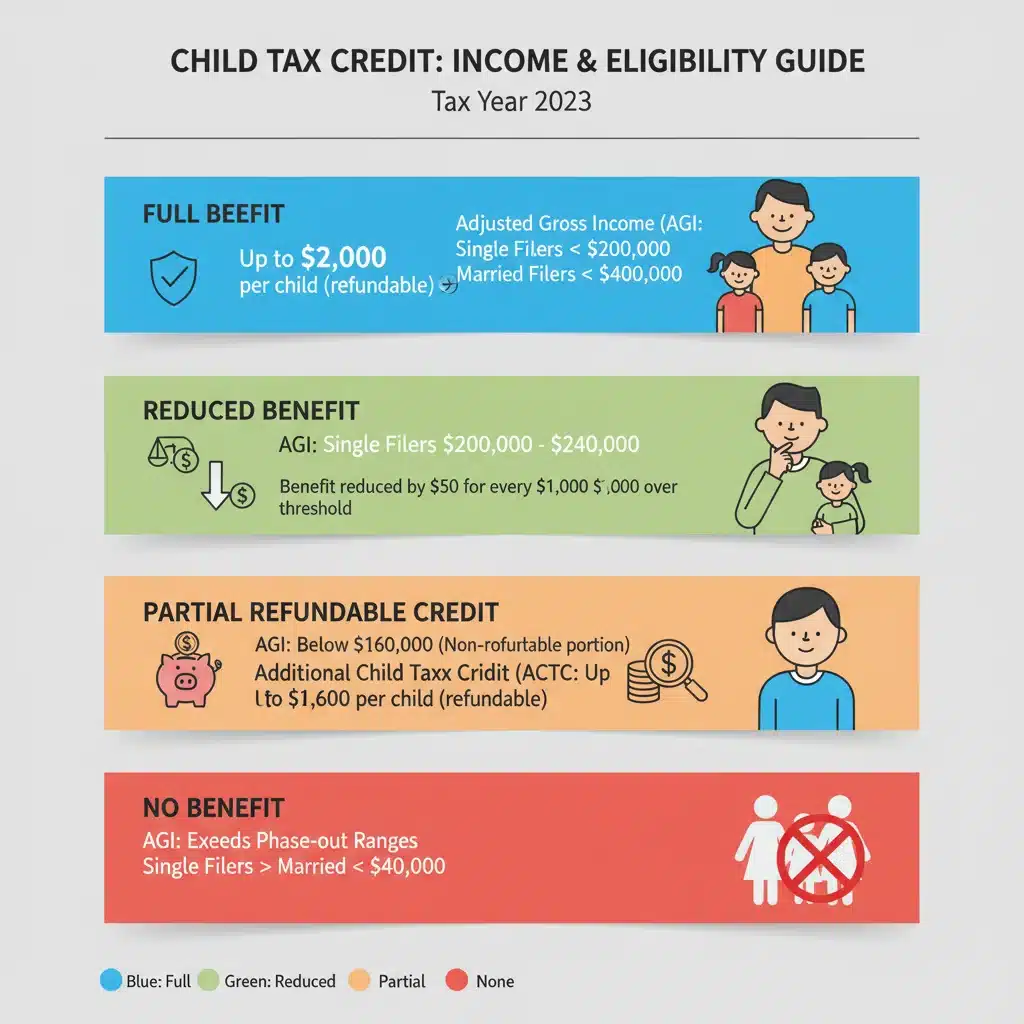
Key Differences Between Current Law and Potential Child Tax Credit 2026 Rules
It’s vital for families to understand the distinctions between the current Child Tax Credit rules and what might be implemented for the Child Tax Credit 2026. These differences can have a substantial impact on the amount of credit you receive.
Refundability: A Game Changer for Low-Income Families
Under current law (post-2021 expansion expiration), the refundable portion of the CTC is capped at $1,600 per child for 2023 (indexed for inflation), and it requires families to have earned income above a certain threshold (currently $2,500) to qualify for the refundable portion. This means many low-income families who don’t owe much in taxes or have very low earnings might not receive the full benefit, or any benefit at all.
For the Child Tax Credit 2026, proposals often aim to make the credit fully refundable, removing the earned income threshold. This would mean that even families with zero taxable income could receive the entire $3,600 (or $3,000) per child. This change is considered by many advocates as the most impactful way to combat child poverty, directly supporting families regardless of their tax liability.
Credit Amount: $2,000 vs. $3,600
The current maximum credit is $2,000 per qualifying child. As discussed, the Child Tax Credit 2026 proposals frequently push for an increase to $3,600 for younger children and $3,000 for older children. This nearly doubling of the maximum credit would provide a much-needed boost to family finances.
Age Limit for Qualifying Children
Currently, a qualifying child must be under 17 at the end of the tax year. Some proposals for the Child Tax Credit 2026 suggest extending this to include 17-year-olds, which was also a feature of the 2021 expansion. This seemingly minor change can offer significant relief to families with teenagers who are still dependents.
Inflation Adjustments
While some aspects of the current CTC are indexed for inflation, a fully expanded Child Tax Credit 2026 might include more robust inflation adjustments to ensure the credit’s value doesn’t erode over time. This would provide greater long-term stability and predictability for families.
How to Prepare for the Child Tax Credit 2026
Even though the specific rules for the Child Tax Credit 2026 are still under discussion, there are proactive steps families can take to ensure they are well-prepared to claim any available benefits:
1. Keep Accurate Records
Maintaining meticulous records is always crucial for tax purposes. For the Child Tax Credit 2026, this includes:
- Birth certificates: To verify the age of your children.
- Social Security Numbers (SSNs) or Individual Taxpayer Identification Numbers (ITINs): Every qualifying child must have a valid SSN or ITIN issued by the due date of your tax return (including extensions).
- Proof of residency: Documents showing your child lived with you for more than half the year (e.g., school records, medical records, utility bills).
- Income records: W-2s, 1099s, and other income statements to accurately report your Adjusted Gross Income (AGI).
2. Stay Informed About Legislative Changes
Tax laws can change rapidly. Follow reputable news sources, government announcements from the IRS, and financial planning blogs that specifically cover tax legislation. Subscribing to newsletters from tax professionals or advocacy groups can also provide timely updates on the Child Tax Credit 2026. The legislative process can be complex, and understanding the potential pathways for these changes is key.
3. Consult a Tax Professional
Tax laws, especially those concerning credits like the CTC, can be intricate. A qualified tax professional can help you understand your specific eligibility, navigate any new rules for the Child Tax Credit 2026, and ensure you claim the maximum credit you are entitled to. They can also advise on how the credit interacts with other tax benefits you might be eligible for.
4. Estimate Your Income
Since eligibility and the credit amount are often tied to income levels, having a good estimate of your Adjusted Gross Income (AGI) for 2026 can help you project your potential credit. This is particularly important if there are new phase-out or phase-in rules for the Child Tax Credit 2026.
5. Understand the Impact on Your Overall Financial Plan
A $3,600 per child credit can have a significant impact on your family’s financial planning. Consider how this potential influx of funds could be used:
- Reducing debt: Paying down high-interest debt can free up future income.
- Building savings: Establishing an emergency fund or contributing to a college savings plan.
- Investing in your children’s future: Funding educational expenses, extracurricular activities, or healthcare needs.
- Addressing immediate needs: Covering essential living expenses, especially for lower-income families.

The Economic and Social Impact of an Expanded Child Tax Credit 2026
An expanded Child Tax Credit 2026, especially one that includes a $3,600 benefit and full refundability, is projected to have far-reaching economic and social benefits:
Reducing Child Poverty
The most cited impact of an expanded CTC is its proven ability to lift children out of poverty. The 2021 expansion demonstrated a dramatic reduction in child poverty rates, especially among minority groups. A similar expansion for the Child Tax Credit 2026 could replicate this success, providing a safety net for vulnerable families.
Boosting Local Economies
When families receive additional financial resources, they often spend it on essential goods and services, such as food, clothing, and household necessities. This increased consumer spending injects money into local economies, supporting businesses and creating jobs.
Improving Child Well-being and Development
Financial stability allows parents to invest more in their children’s health, nutrition, and education. This can lead to better health outcomes, improved academic performance, and greater opportunities for children in the long run. The positive effects of an expanded Child Tax Credit 2026 can ripple through generations.
Enhancing Parental Employment
For some families, the financial relief from an expanded CTC can reduce the pressure to take on multiple jobs or work excessive hours, allowing parents more time for childcare and family responsibilities. Conversely, for others, it might provide the resources needed for childcare, enabling them to seek or maintain employment.
Potential Challenges and Criticisms of the Child Tax Credit 2026
While an expanded Child Tax Credit 2026 enjoys broad support, it also faces potential challenges and criticisms that are part of the legislative debate:
Fiscal Cost
One of the primary concerns is the overall cost of a significantly expanded credit. Making the $3,600 benefit permanent and fully refundable would represent a substantial investment of federal funds. Debates often center on how to offset these costs or ensure the program is fiscally sustainable without adding excessively to the national debt.
Inflationary Concerns
Some critics argue that injecting large amounts of money into the economy through programs like an expanded CTC could contribute to inflation. Proponents counter that the targeted nature of the credit, often spent on necessities, makes its inflationary impact minimal compared to its benefits.
Work Incentives
Another point of discussion revolves around work incentives. Critics sometimes argue that fully refundable credits without an earned income requirement could disincentivize work. However, research on the 2021 expansion largely showed minimal impact on parental employment, and in some cases, even enabled parents to work more by affording childcare. The design of the Child Tax Credit 2026 will likely consider these work incentive aspects.
Complexity of Tax Code
Frequent changes to the CTC can add complexity to an already intricate tax code, potentially making it harder for taxpayers to understand and claim the benefits they are due. Simplifying the application and claiming process is often a goal for any new legislation.
The Legislative Path Forward for Child Tax Credit 2026
The path to an expanded Child Tax Credit 2026 is through legislative action. This typically involves proposals being introduced in Congress, undergoing committee review, debates, and votes in both the House of Representatives and the Senate, and ultimately, presidential approval. Bipartisan negotiations are often crucial for passing significant tax legislation.
As 2026 approaches, discussions will intensify. Key factors influencing the outcome include:
- Political Climate: The composition of Congress and the White House significantly impacts legislative priorities and the ability to pass new laws.
- Economic Conditions: The state of the economy, including inflation rates and unemployment, can influence the perceived need for and design of family support programs.
- Advocacy Efforts: Organizations and individuals advocating for child poverty reduction and family support play a vital role in keeping the issue on the legislative agenda.
- Budgetary Constraints: The federal budget and concerns about national debt will always be a factor in determining the scope and size of any CTC expansion.
Families should monitor these developments closely, as the specific details of the Child Tax Credit 2026 will emerge from these legislative processes. The exact amounts, eligibility rules, and refundability provisions will all be shaped by these ongoing discussions.
Conclusion: Preparing for a Potentially Expanded Child Tax Credit 2026
The Child Tax Credit 2026 holds the promise of significant financial relief for millions of American families, potentially offering a $3,600 per child benefit and expanded eligibility. While the exact legislative framework is still taking shape, the discussions point towards a renewed commitment to supporting children and alleviating family financial burdens.
For parents and guardians, staying informed, maintaining accurate records, and consulting with tax professionals are the best strategies to ensure you are ready to claim the maximum benefits available when the time comes. The potential for an enhanced Child Tax Credit 2026 represents not just a financial opportunity, but a critical investment in the future well-being and prosperity of our nation’s children. By understanding the potential changes and preparing proactively, families can navigate the evolving tax landscape and secure the support they need.
Continue to monitor official IRS announcements and legislative updates to ensure you have the most current information regarding the Child Tax Credit 2026 and its implications for your household.